Table of Contents
This guide walks Chattanooga, Cleveland, and North Georgia homeowners through what to check on their gutters each season, from spring pollen and summer storms to fall leaf drop and winter ice, so small problems get fixed before they turn into costly water damage.
How Chattanooga Weather Keeps Your Gutters Busy
Chattanooga averages more than 50 inches of rain a year, and the mountains and ridges that surround the city make that weather hit harder. Spring brings severe storms rolling up the Tennessee Valley, summer brings pop-up thunderstorms that dump heavy rain in a short window, and by November, the hardwoods on Signal Mountain, Lookout Mountain, and every hillside in between empty onto the roofs below. From North Chattanooga to Cleveland to Ringgold, your gutters handle it all, and they don’t get much of a season off.
Why Your Home Needs a Maintenance Calendar
Most homeowners already keep some schedule, whether that’s changing the HVAC filter, servicing the mower in March, or testing smoke detectors when the clocks change. Gutters belong on that same list. A clogged or sagging gutter sends water where it shouldn’t go, into your fascia, down your siding, and toward your foundation, and the damage usually shows up long after the gutter problem started. Planning your gutter maintenance in Chattanooga around the seasons helps you catch a loose hanger or a leaky seam before it becomes a rotted board or a wet basement.
Your Season-by-Season Gutter Checklist
Each season around Chattanooga and North Georgia asks something different of your gutters. Here’s what to check and when.
Spring: Clear the Pollen and Prep for Storm Season

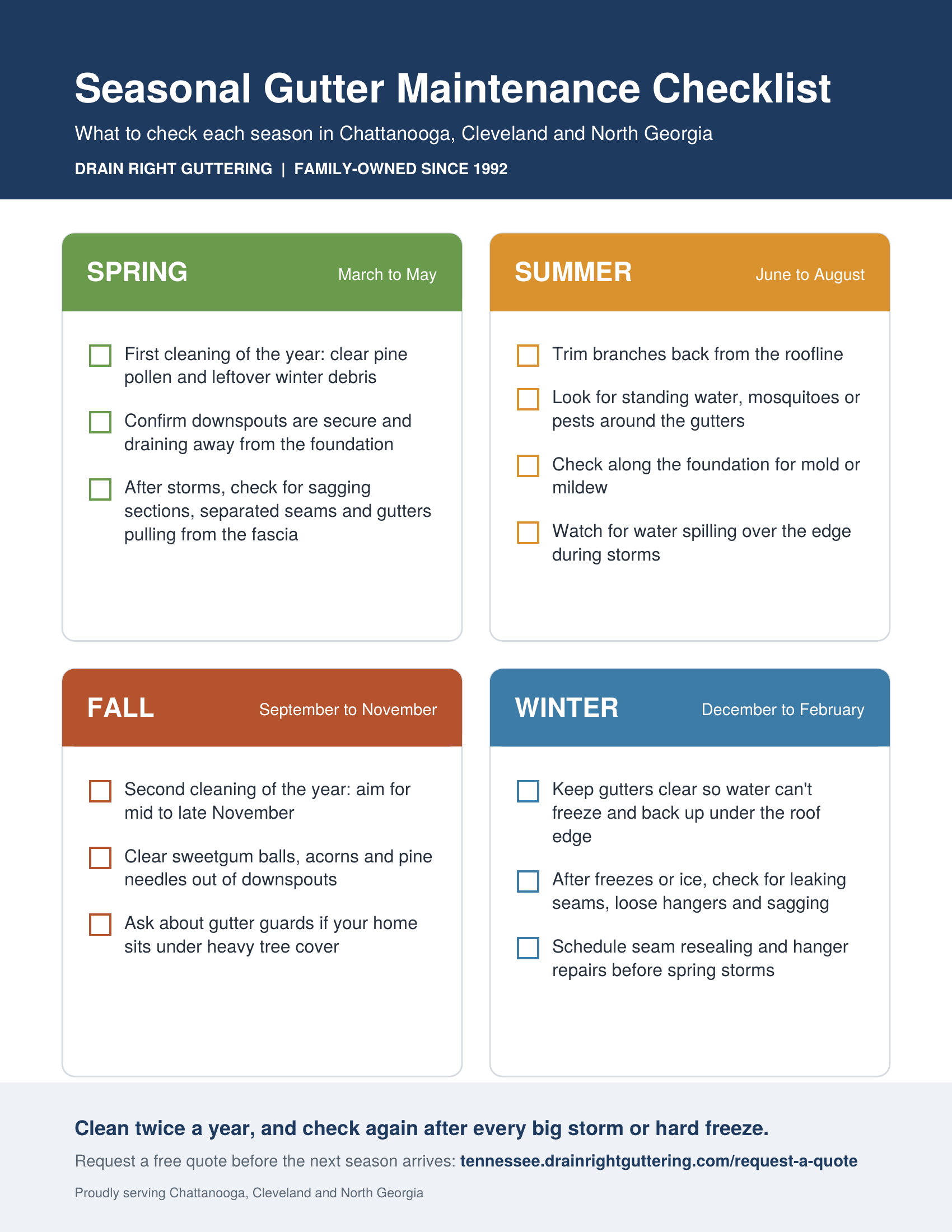
Chattanooga regularly ranks among the toughest cities in the country for spring allergies, and by late March a yellow coat of pine and oak pollen covers cars, porches, and just about everything else. Much of it washes straight into your gutters, where it mixes with leftover winter debris and turns into a sludge that slows drainage right as the year’s heaviest storms roll in. Spring is a smart time for the first of your two yearly cleanings. Make sure downspouts are secure and directing water away from the foundation, and after any severe storm, walk around the house looking for sagging sections, separated seams, or gutters pulling away from the fascia. Any of those needs prompt repair before the next round of rain.
Summer: Watch for Standing Water and Overgrown Branches

Summer in the Tennessee Valley means humidity, afternoon storms, and trees at full growth. Branches that looked fine in February can hang over your roofline by July, dropping twigs and seed pods into the gutters. Water that pools in a partly clogged gutter becomes a breeding ground for mosquitoes, and pests hanging around your gutters are a reliable sign that water is sitting somewhere it shouldn’t. Trim branches back from the roof, keep an eye out for mold or mildew along the foundation, and schedule an inspection if you see water spilling over the edge during a storm.
Fall: The Heaviest Cleaning of the Year

Fall is when Chattanooga-area gutters take their biggest hit. Oaks, maples, hickories, and sweetgums start dropping leaves in October, peak color arrives in early November, and pine needles keep falling right alongside them. Acorns and sweetgum balls cause extra trouble because they wedge into downspouts and trap everything behind them. This is the second of your two yearly cleanings, and timing matters here. Clean too early and the gutters fill right back up, so mid to late November usually works best around Chattanooga and North Georgia. If your home sits under heavy tree cover, and many homes on the mountain do, fall is also a good time to ask about gutter guards, which cut down on the debris that builds up in your system.
Winter: Check Seams and Hangers After Freezes and Ice

Winters around Chattanooga are mild most days, but hard freezes are common from December through February, and homes on Lookout Mountain and Signal Mountain see snow and ice more often than the valley floor. Water trapped in a clogged gutter freezes, expands, and stresses seams, hangers, and fasteners; on the coldest nights, it can back up under the roof edge. A clean gutter going into winter keeps water moving so there’s less of it to freeze. After a cold snap or ice storm, look for leaking seams, loose hangers, and gutters sitting lower than they used to. Bare trees make winter the easiest time to spot damage from the ground, and repairs like seam resealing and hanger replacement can be finished well before spring storms return.
Keeping Your Gutters on Schedule Year-Round
A gutter system that gets cleaned twice a year and checked after big weather will last longer and protect your roof, foundation, and landscaping far better than one that only gets attention once water starts pouring over the edge. Put these four seasonal checks on the same calendar as the rest of your home maintenance, and the work stays small and manageable (and a lot safer than climbing a ladder the morning after a storm). Request a free quote before the next season arrives, and we’ll get you on the schedule.
Frequently Asked Questions
How often should I clean my gutters in Chattanooga?
At least twice a year, once in spring and once in late fall. It’s also worth having them checked after any severe storm, hard freeze, or ice storm.
When is the best time for a fall gutter cleaning around Chattanooga?
Mid to late November usually works best. Waiting until most of the leaves have dropped keeps your gutters from filling right back up.
Why does spring pollen matter for my gutters?
Pine and oak pollen washes into gutters and mixes with leftover debris, forming a sludge that slows drainage. That buildup hits right as spring storm season brings the heaviest rain of the year.
What signs mean my gutters need attention in summer?
Watch for water spilling over the edge during storms, mosquitoes or other pests around the gutters, and mold or mildew along the foundation. Each one points to water pooling in a clog.
Can winter weather in Chattanooga damage gutters?
Yes. Water trapped in clogged gutters freezes and expands, which stresses seams, hangers, and fasteners, and homes on the mountain see ice more often than the valley. Clean gutters going into winter help prevent this.
Are gutter guards worth it if I have a lot of trees?
Gutter guards reduce the leaves, needles, and other debris that build up in your system, lowering the risk of clogs. They’re most helpful for homes under heavy tree cover.
What gutter repairs can be done in winter?
Seam resealing and hanger replacement are common winter repairs. Bare trees also make it easier to spot sagging or separated sections from the ground.
What should I look for after a severe storm?
Walk around the house and check for sagging sections, separated seams, and gutters pulling away from the fascia. Make sure your downspouts are still secure and directing water away from the foundation, since any of these problems need prompt repair before the next storm.
Download Your Seasonal Gutter Checklist
Keep this one-page checklist on the fridge or in your home binder so you can easily find each season’s gutter checks when you need them.